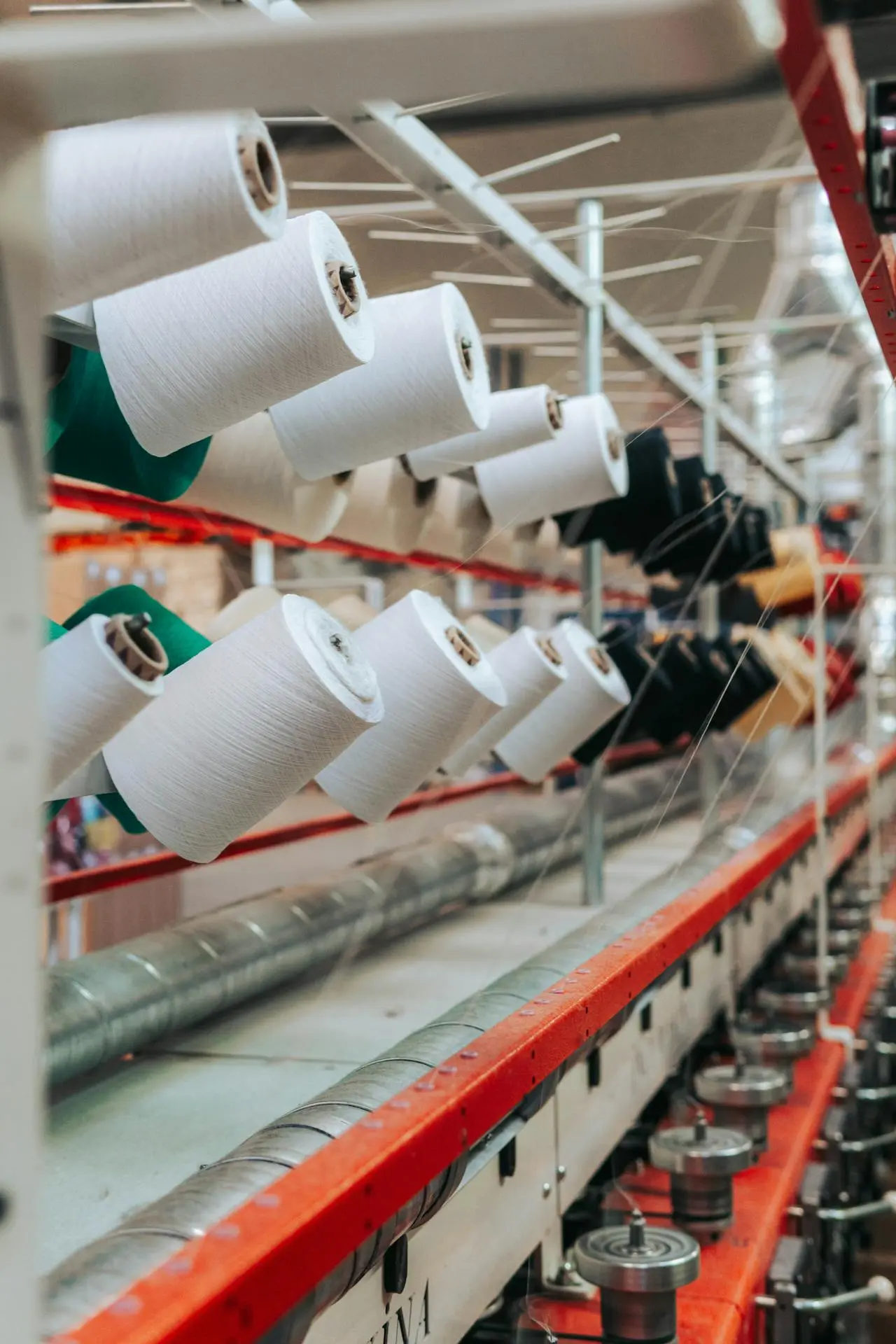
- Yarn count: indicates the fineness of yarn. Metric count (Nm) refers to the length in meters of 1 gram of yarn; the higher the value, the finer the yarn. English count (Ne/S) refers to the multiple of 840 yards per pound of yarn; the higher the value, the finer the yarn. 32S and 40S are commonly used for knitted cotton; the higher the count, the lighter and finer the fabric.
- Denier: a fineness unit for chemical fibers and silk. It refers to the weight in grams of 9,000 meters of yarn under standard moisture regain; the higher the denier, the coarser the fiber. For example, 20D silk is finer than 40D silk.
- Ply number: refers to yarn made by twisting several single yarns together. For example, two-ply yarn is more uniform, more wear-resistant, and stronger than single-ply yarn.
- Twist: the number of twists per unit length of yarn, usually expressed in twists per meter or twists per inch. The higher the twist, the tighter and stiffer the yarn feels, and the fabric surface is more likely to skew.
- Fabric weight: weight per unit area of fabric – an important technical index for knitted fabrics, commonly expressed in grams per square meter (g/m² or GSM). It is a direct standard to judge fabric thickness and material usage: summer T-shirts 160~200 GSM, spring/autumn sweatshirts 280~350 GSM, denim 350~450 GSM.
- Fabric width: the effective usable width of fabric, often expressed in inches or centimeters. Common widths include 99/100 inches (approx. 250 cm) and 57/58 inches (approx. 147 cm). Width directly affects material cost.
- Warp and weft density: indicates the number of yarns per unit length of woven fabric, i.e., the number of warp and weft yarns per inch or per 10 centimeters. For example, “133×72” means 133 warp yarns and 72 weft yarns per inch.
- Float length: the length of a single yarn continuously floating over several adjacent yarns. The longer the float length, the smoother the fabric surface (e.g., satin weave), but the more easily the fabric snags.
- Loop: the basic geometric unit in knitted fabrics, consisting of a loop arc and a loop stem. The interlocking of loops determines the elasticity of knitted fabrics.
- Terry loop: the raised loop arc on the surface of knitted fabrics, commonly used in terry cloth to enhance water absorption or warmth retention.
- Shrinkage rate: the percentage of dimensional change of fabric after washing or soaking. Chinese national standard requires premium products to be within ±3%. It is recommended to reserve shrinkage allowance when purchasing pure cotton fabrics.
- Color fastness: the ability of fabric color to resist external effects, including washing, rubbing, light, perspiration, etc. Rated from Level 1 to Level 5 (5 is highest). Rubbing fastness for close-fitting garments is recommended above Level 3.
- Anti-pilling resistance: the degree of pilling on the fabric surface during use. Rated from Level 1 to Level 5 (Level 3 is acceptable). Pure polyester or polyester-cotton blends are more prone to pilling; this can be improved by finishing processes such as singeing and shearing.
- Breaking strength / tearing strength: breaking strength is the maximum force a fabric can withstand when stretched to break; tearing strength is the force required to continue tearing a fabric with an existing cut. Both affect garment durability.
- Flexibility and Stiffness: the fabric’s ability to resist bending deformation, affecting drapability and hand feel. Soft fabrics are suitable for underwear, while stiff fabrics are ideal for outerwear or interlining.
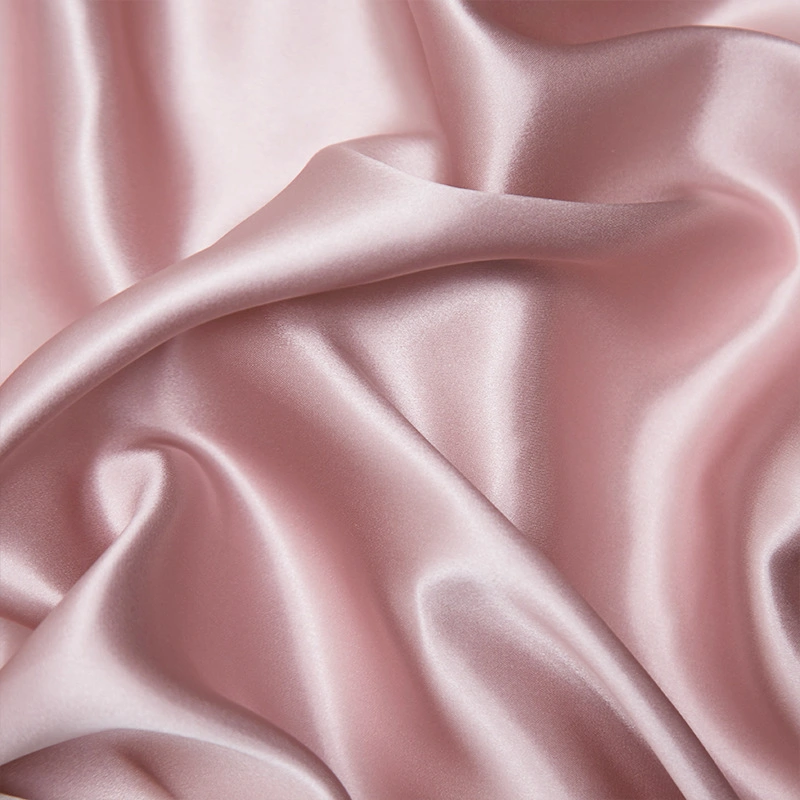
- Drapability: the property of fabric naturally hanging down to form wave-like curves under its own weight. Fabrics with good drapability (e.g., silk, viscose) are perfect for elegant dresses
- Air Permeability: the ability of air to pass through fabric, expressed as air permeability rate (mm/s). Outdoor windproof jackets require low air permeability, while summer garments need high air permeability.
- Pretreatment: preparation processes before dyeing or printing, including desizing, scouring, bleaching, mercerizing, etc. The purpose is to remove impurities and improve whiteness or luster.
- Mercerization: treatment of cotton fabric with concentrated caustic soda solution under tension to swell fibers and round their cross‑section, thereby enhancing luster, strength, and dye adsorption capacity. Mercerized cotton refers to yarn or fabric processed in this way, featuring a silk‑like surface sheen.
- Heat Setting: for synthetic fibers (e.g., polyester, nylon), heat is applied to rearrange the molecular structure of fibers, stabilizing dimensions, eliminating internal stress, and reducing wrinkles.
- Coating: applying a layer of polymer material (e.g., PU, PA) onto the fabric surface to impart functions such as waterproofing, down‑proofing, flame retardancy, etc.
- Brushing / Raising: using sanding rollers or metal brushes to raise short, dense fluff on the fabric surface, improving hand feel and warmth retention. Typical products include brushed bedding, polar fleece, peach skin fabric.
- Antistatic / Water & Oil Repellent Finishing: functional finishing treatments to enhance wearing comfort and multi‑functionality of fabrics
- Greige fabric: unprocessed woven or knitted fabric without dyeing or printing, usually off‑white or natural in color.
- Batch / Roll Variation: differences in color, width, hand feel, etc., between different rolls or batches of the same fabric. Obvious variation should be avoided when purchasing bulk goods.
- Weft Skew: the condition where weft yarns are not perpendicular to warp yarns in woven fabric, causing distortion of printed patterns, checks, or stripes. It affects pattern matching during garment making.
- Left Twist / Right Twist: the twisting direction during yarn spinning, divided into S‑twist (left) and Z‑twist (right). Fabrics with different twist directions may differ in appearance and skew tendency.
- Weave Interlacing Point: the position where warp and weft yarns intersect and overlap in a woven fabric.